
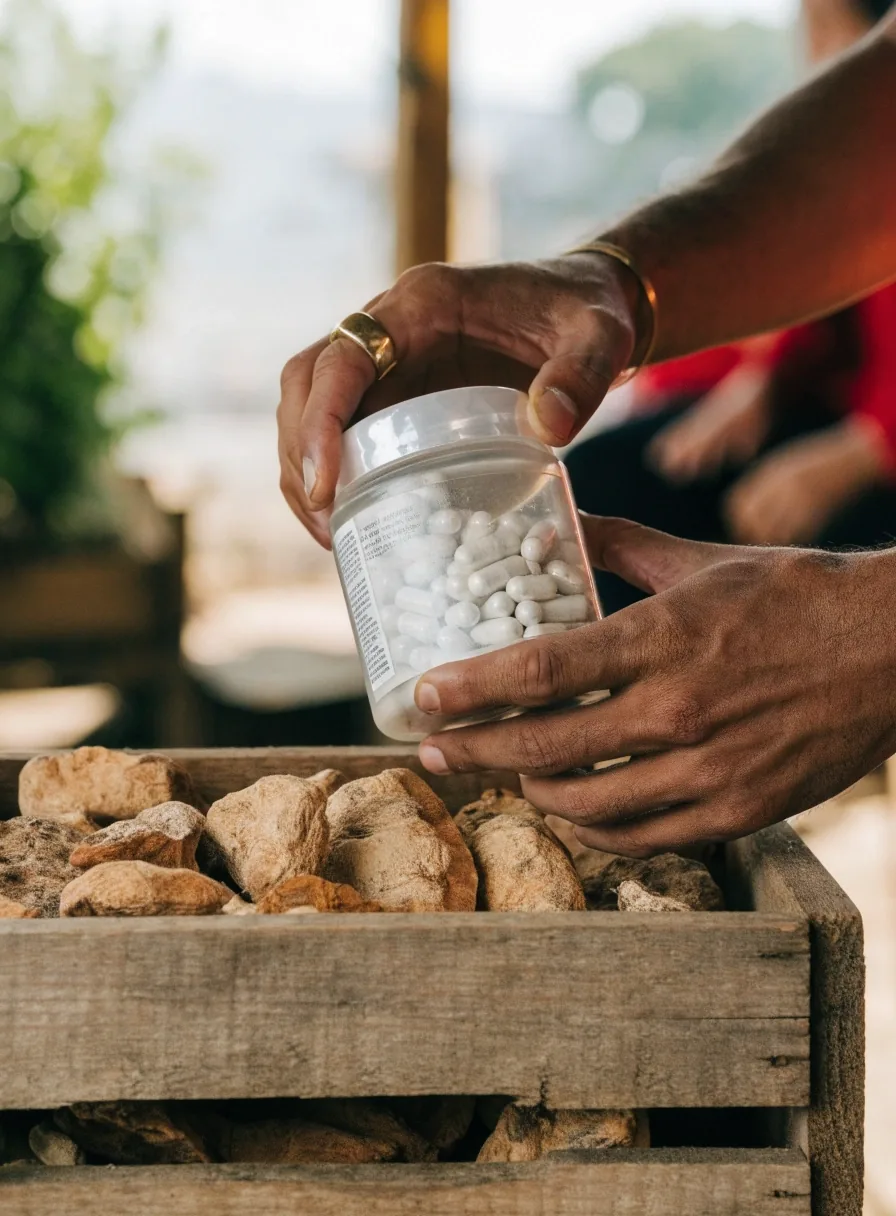
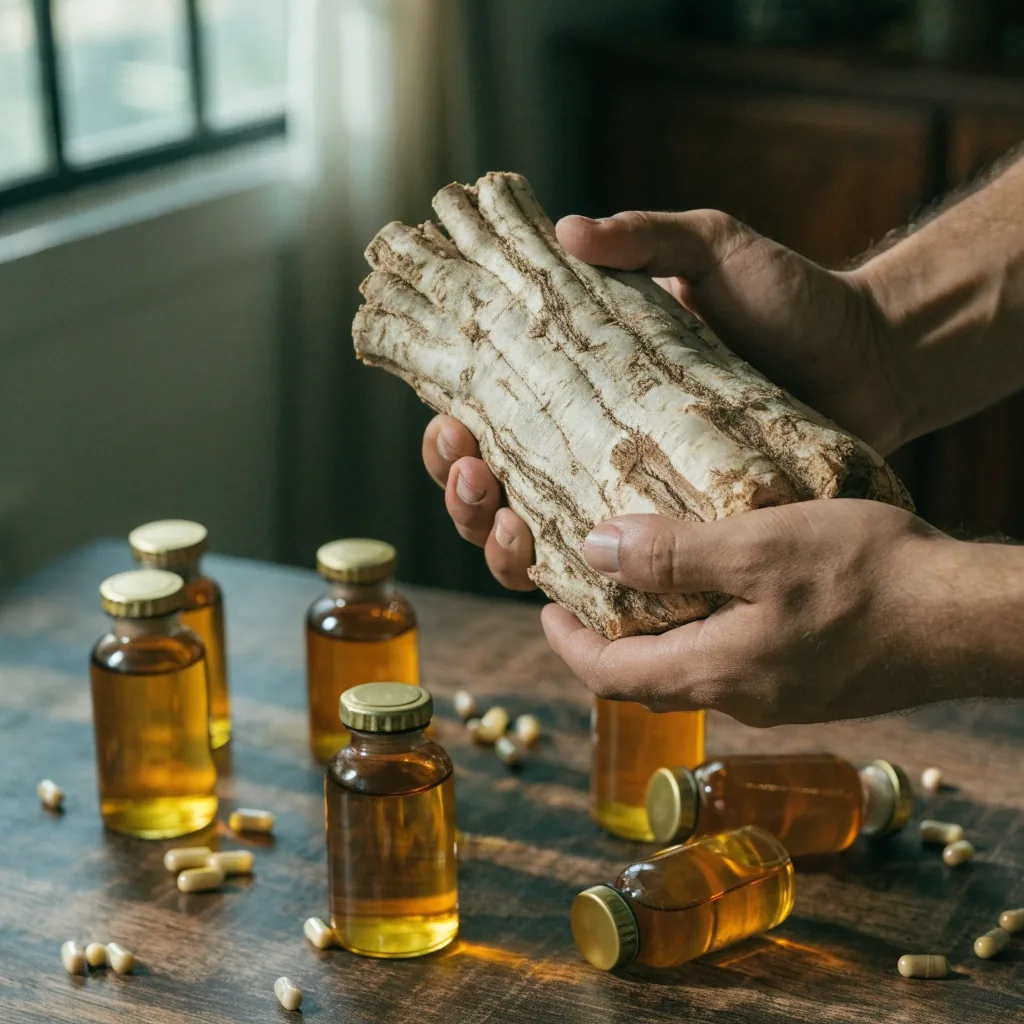
Maca root · 525 mg capsule
Natural capsules and herbal ingredients
Maca root first, then everything else on the label.
Start here
Herbal capsules are the part of the men's supplement shelf where branding runs loudest and labels matter most. This page works through the ingredients you will actually see, starting with maca root, and explains how to compare plant-based formulas when the marketing language is doing a lot of the talking.
If you are building a daily routine, this shelf usually sits next to your vitamins and minerals for men rather than replacing them. The two cover different ground. What matters here is the ingredient list: which plant, how much, and in what form.
525 mg stated maca per capsule
100 capsule count, the size you restock
Plant cellulose or gelatin
Why plant capsules stay popular
Herbal capsules appeal to people who want their daily supplement to come from recognizable plants rather than a vitamin panel. In Indonesia that preference sits alongside a strong tradition of plant-based ingredients in food and everyday health practice.
The result is a crowded category: local brands and imported labels competing on the same shelf with similar-sounding names. Two bottles can use the same three words and still describe very different things. The ingredient list is the only reliable way through it, because it is the one part of the packaging a brand cannot make vague without you noticing.
That is why this page treats the label as the product. Everything below is about reading one properly.
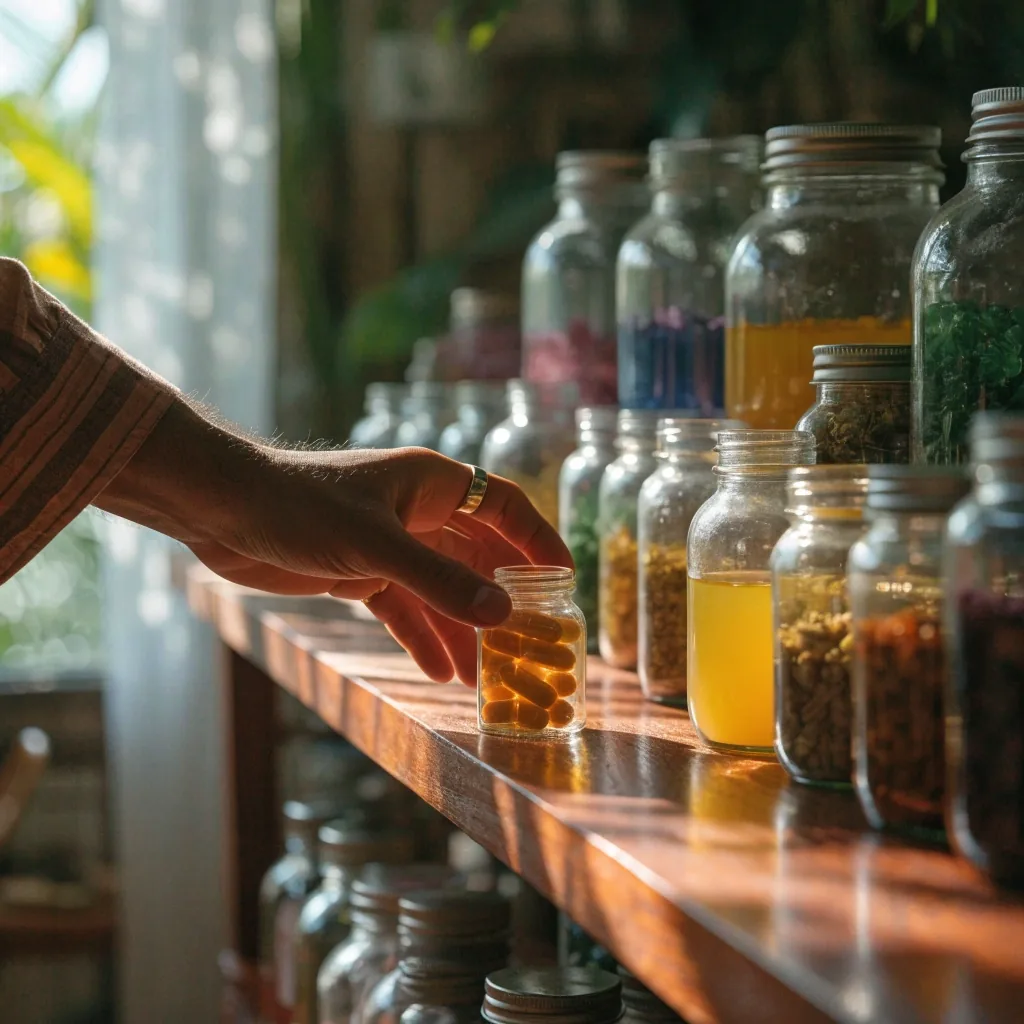
Local and imported labels share one shelf
Similar-looking bottles, different ingredient lists. The rest of this page is about telling them apart before you buy.
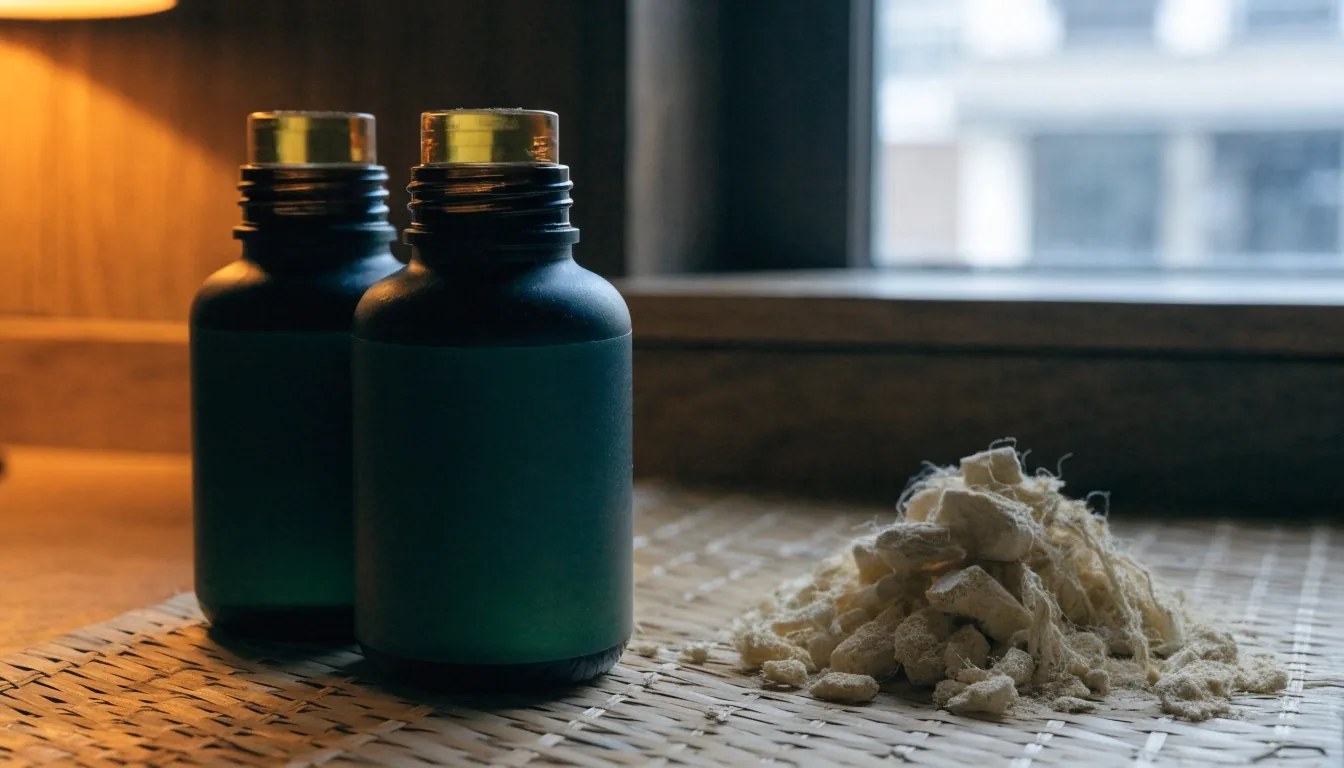
Maca root as a reference ingredient
Use this shape as your template when reading other botanical labels: a stated milligram amount, a clear capsule count, and plant-based positioning instead of a nutrient percentage.
- 01 Maca root, 525 mg per capsule Stated botanical weight
- 02 100-capsule bottle Capsule count on the listing
- 03 Plant-based positioning No nutrient percentage claimed
- 04 Capsule format, not a sachet or powder How the dose is carried
- 05 Guardian Indonesia listing Where the figures are published
Maca root is the most widely recognized botanical in this space, which makes it a useful yardstick. When a label gives you a milligram figure, a capsule count and a plant name, you can compare it line by line against anything else on the shelf. When it gives you a paragraph of mood instead, you cannot.
Compare energy and endurance formulasReading a herbal blend label
Two products can both say herbal blend and be very different. One lists each extract with its own milligram figure. The other puts everything into a single proprietary blend line with one total weight.
The first tells you what you are taking. The second does not, and that is not automatically dishonest, but it does limit comparison. Prefer labels that state amounts, even when the total is smaller than the rival bottle's.
Capsule materials and practical details
One capsule, one stated amount, one line on the label
Extracts, powders, and ratios
Herbal ingredients arrive as powders, standardized extracts, or concentrated ratios. Neither format is universally better. What matters is that the label tells you which one you are buying.
Ratio concentrates
A ratio such as 10:1 describes how much raw plant material went into the concentrate. It is a production figure, not a strength figure, and it says nothing about how the ingredient behaves in a routine.
- States raw material used Yes
- States a marker compound Usually not
- Comparable across brands Only if the ratio is printed
Standardized extracts
Standardized extracts usually name a marker compound and its percentage. That makes the bottle easier to line up against a competitor's bottle, because both are describing the same measurable thing.
- States a marker compound Yes, with a percentage
- States raw material used Often not
- Comparable across brands Yes, on that compound
Local and imported herbal brands
Guardian Indonesia's men's health category shows the mix clearly: Seaquill Herbal Mantix and Natures Prostagone sit alongside Nutrimax products and imported names. Both sides of that shelf have something to offer.
Local herbal products are often easier to reorder and cheaper per capsule. Imported labels sometimes carry more documentation. Neither factor decides quality on its own, so weight the label clarity and restock practicality more heavily when you choose.
Local range
Easier restock, lower cost per capsule
Imported range
Sometimes fuller documentation on the label
Two ways to judge either side
- A Label clarity Amounts printed per ingredient
- B Restock practicality Can you buy it again next month
Capsule materials and practical details
Herbal capsules are usually plant cellulose or gelatin, and most listings state which. That single line tells you whether the capsule fits how you want to take it.
Size matters more than people expect: a 100-capsule bottle of large capsules is harder to finish than a smaller bottle of easy-to-swallow ones. Storage in Indonesia's humidity also deserves a thought, so keep the bottle closed, dry, and out of direct sunlight.
Plant cellulose or gelatin
Capsule size stated
Store closed, dry, out of sun
Combining herbals with a daily multivitamin
There is usually no conflict between a plant capsule and a basic multivitamin, because they cover different ground. The overlap risk is smaller here than with two mineral-heavy products. Still, the sensible move is to show both labels to a pharmacist, particularly if you take anything else regularly.
We describe ingredients; we do not give personal intake advice. That is a boundary worth keeping, because the right answer for one person's routine is not automatically the right answer for yours. A pharmacist can read your whole list at once, which no product page can.
Read the healthy lifestyle guideWhat plant-based does not mean
Plant-based is a sourcing statement, not a safety guarantee. Botanical ingredients can interact with other products, and the word natural says nothing about dose.
It also does not mean a product will feel different within days. Treat botanical capsules as a longer, quieter part of a routine, and judge them on transparent amounts rather than on how the bottle looks.
Where this shelf sits in a routine
Alongside your vitamins and minerals for men, not instead of them. Both are healthy lifestyle products that only work as well as the routine around them.
Questions about herbal capsules
Short answers to the three things readers ask most often about plant capsules.
Is maca root a stimulant?
No. It is a plant ingredient used in capsule form, not a stimulant in the caffeine sense. Products that include stimulants usually say so on the label.
How do I compare two herbal blends fairly?
Line up the ingredient amounts per serving. If one lists individual figures and the other hides everything in a single blend weight, you have your answer about which is easier to evaluate.
Are plant capsules suitable for daily use?
Follow the serving on the label. Most are built for daily use, but the stated dose is the only figure that should guide you.
Where to go next on the shelf
Once the label reads clearly, the next step is comparing it against the rest of the range. These three pages carry the same ingredient-led detail.
- Browse men's vitamin formulas Daily vitamin and mineral panels, read the same way as the herbals above.
- Compare energy and endurance formulas What goes into formulas built around maca root and similar botanicals.
- See how we evaluate formulas The checklist we run labels through, from stated amounts to capsule format.
Visit or write to us
Energi Indonesia
Jl. Malioboro No. 45, Sosromenduran, Gedong Tengen, Yogyakarta, 55271
Monday–Friday, 09:00–18:00
Still comparing?
Ask us about a labelIngredient questions only. We describe formulas; we do not give personal intake advice.